1
The old rationalist negotiation playbook (BATNA, win-win, split the difference) was built on a false model of how humans actually decide.
Most readers forget the majority of a book within weeks. ChapterFlow turns every chapter into a structured loop that actually makes ideas stick — for good.
No credit card · 2 full books free
“I actually remember what I read now.” — Sarah K., senior product manager
Based on Ebbinghaus's Forgetting Curve — active recall is the only proven method to beat it.
You highlight. You take notes. You tell yourself you'll come back to it. A month later, you can barely name the chapters — let alone use the ideas that were supposed to change how you think.
Every chapter follows the same structured loop — designed around how your brain actually retains information.
UNDERSTAND
Choose Lite, Standard, or Deeper. Get the chapter’s main idea, key insight, and takeaways — structured for clarity, not length.
APPLY
Scenario examples translate abstract concepts into practical decisions at work, school, or in everyday life.
PROVE
Five scenario-based questions test whether you can actually apply what you learned. Not trivia — applied thinking.
PROGRESS
Pass the quiz, unlock the next chapter. Progress is earned, not scrolled through. Every unlock means real understanding.
Summary. Examples. Quiz. Practice. Every chapter, every book.
Summary
Before you read —Think of a recent negotiation that didn't go the way you wanted (a salary talk, a price haggle, a tough conversation with a partner). As you read, look for the moment you reached for logic when the other side needed empathy.
For decades, negotiation theory taught that humans are rational actors who maximize utility. The traditional advice (have a strong BATNA, find a fair middle, split the difference) was built on that assumption. Voss spent two decades as the FBI's lead international hostage negotiator and learned the assumption is wrong.
Real negotiations are emotional. People don't decide based on what's logical. They decide based on what feels safe, fair, and respected. Push them toward logic and they dig in. Help them feel heard and they open up.
The skill the book teaches is tactical empathy: understanding the other side's emotions and intentions deeply enough to influence the conversation, not by arguing your case, but by making them feel like the case argues itself.
Key Takeaways
The old rationalist negotiation playbook (BATNA, win-win, split the difference) was built on a false model of how humans actually decide.
Behavioral economics has shown that people are loss-averse, emotionally driven, and routinely irrational. Negotiation strategies that assume the other side is a calculator will lose to strategies that recognize the other side is a person.
Tactical empathy is the active skill of recognizing the other side's feelings and using that recognition to shift the conversation.
It's not the same as sympathy. You don't have to agree. You just have to demonstrate that you understand. That demonstration is what lowers the other side's defenses and makes movement possible.
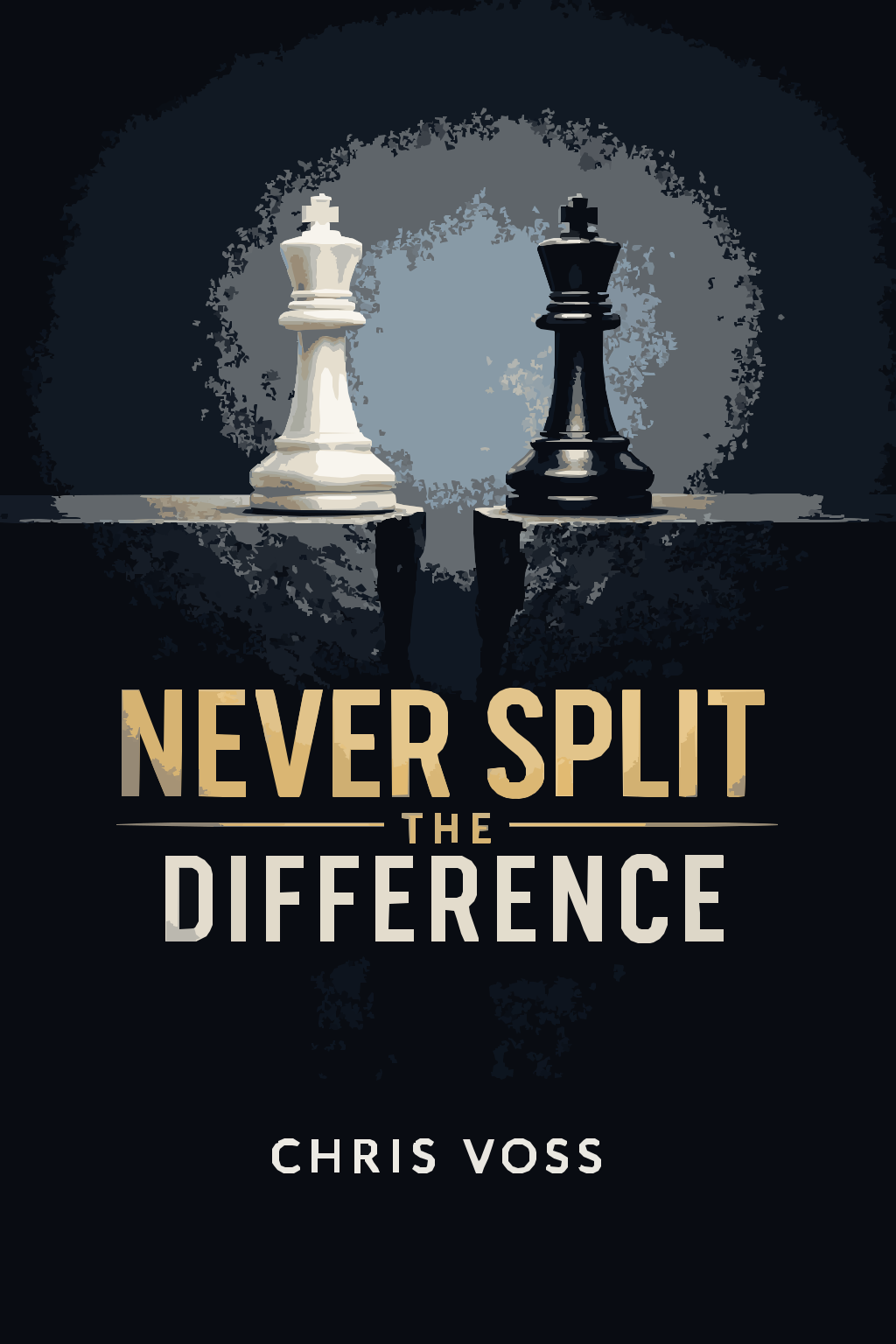
Compromising is rarely the right answer. Splitting the difference often produces an outcome both sides feel worse about than the original positions.
If you want a black shoe and a brown shoe, splitting the difference gives you one of each. The middle is not always the best. Real negotiators look for asymmetric trades where each side gets what matters most to them.
The first job in any negotiation is to make the other side feel safe enough to talk.
Without safety, you'll get positions, not interests. People defend positions; they share interests. Calibrated questions and labeling emotions are the tools that build that safety quickly.
Reflect
In your own words, why does Voss say splitting the difference is usually a failure?
What's the difference between a position and an interest? Give an example from your life.
In one minute
The old rationalist negotiation playbook was built on a model of how humans decide that turns out to be wrong.
Tactical empathy (recognizing emotion and reflecting it back) is the operational replacement.
Compromise is a failure mode. Real negotiators find asymmetric trades where each side gets what matters most.
The first move in any negotiation is making the other side feel safe enough to share their actual interests.
Every title is broken into chapters with summaries, scenarios, and quizzes. Browse by topic, pick a book, start reading with structure. Showing 8 of 64.
No annual lock-in. No confusing tiers. Two plans, one purpose.
The average non-fiction book costs $18. ChapterFlow Pro gives you unlimited structured access for less.
Try ChapterFlow with two complete books.
That's $0.27/day
Unlimited books and the deepest reading mode.
No credit card to start. Upgrade anytime from your account.
Try ChapterFlow freeNo summaries. No shortcuts. Real retention.
Every chapter is a 20-minute loop: read, apply, prove, unlock. Start free — no credit card, no commitment.